Safety
Helmets and lights: what the rules require, and when to replace
A bike helmet meets a mandatory federal standard and is designed for one impact. What that means for replacement, and what the rules do not cover at all.
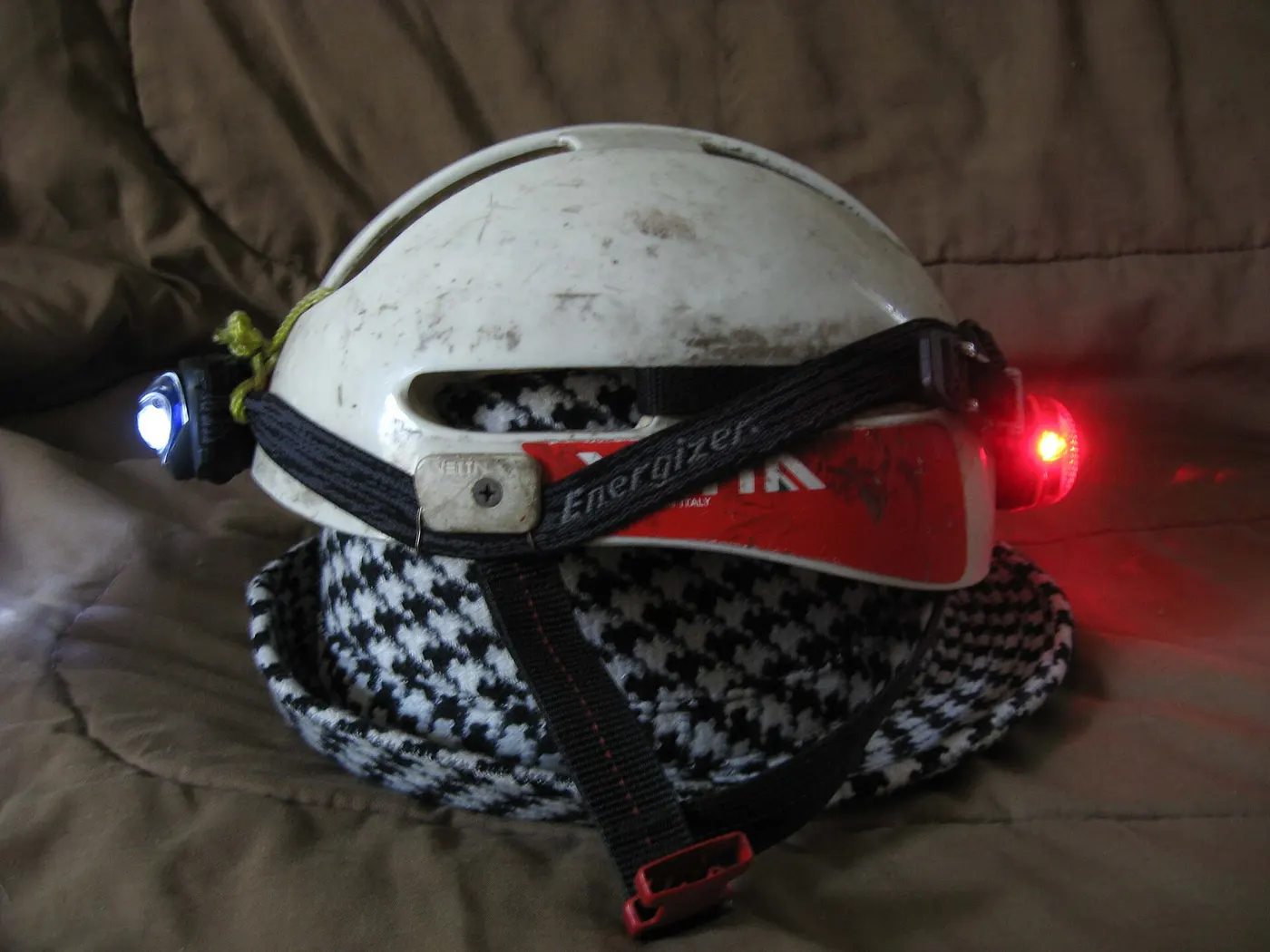
Two pieces of safety equipment on a bicycle are regulated, and the rest is not. Knowing which is which saves money on the unregulated parts and stops people making the one expensive mistake on the regulated ones.
This guide covers what the federal helmet standard actually guarantees, when a helmet has to go in the bin, what the bicycle regulation requires of reflectors and brakes, and where lights and locks sit, which is outside both. Prices are example figures, labelled as such in the same sentence.
Every helmet sold here meets the same mandatory standard
The Consumer Product Safety Commission states that beginning in February 1999, all bike helmets manufactured or imported for sale in the United States are required to meet a federal safety standard set by the Commission, published as the Safety Standard for Bicycle Helmets at 16 CFR part 1203.
The Commission describes what the standard is for: it ensures that bike helmets adequately protect the head and that chin straps will be strong enough to prevent the helmet from coming off in a crash, collision or fall. It also notes that helmets intended for children up to age 5 cover more of the head to provide added protection.
The consequence for a buyer is the most useful fact in this guide. A $40 helmet and a $220 helmet sold in the United States both meet the same mandatory standard, so the extra $180 buys ventilation, weight, fit adjustment and appearance rather than a higher compliance threshold. Fit is what varies, and fit is what you test on your own head.
| Example price band | What changes | What does not change |
|---|---|---|
| $40 to $70 | Basic retention dial, fewer vents, heavier shell | Compliance with 16 CFR part 1203 |
| $70 to $140 | Better fit adjustment, more vents, lighter | Compliance with 16 CFR part 1203 |
| $140 and above | Lightest shells, most ventilation, finish | Compliance with 16 CFR part 1203 |
Price bands are examples used to make the point about where the money goes. The Commission's requirement applies to all bike helmets manufactured or imported for sale in the United States since February 1999.
One impact, then it is finished
The federal standard requires the helmet itself to carry the warning. The Consumer Product Safety Commission's business guidance describes it as a warning that a helmet that has received an impact may be damaged so much that it no longer protects the rider, and that such damage may not be visible, telling the user to return to the manufacturer any helmet that has received such an impact, or to destroy and replace it.
That is the rule people most often get wrong, because a helmet that has taken a hard knock usually looks fine. The expanded foam liner absorbs energy by compressing, and a compressed section does not spring back. A cracked shell or a visible dent makes the decision obvious; the absence of those marks is not evidence that the liner underneath is intact, which is exactly what the required warning says.
Price that in before it happens. On the example bands above, replacing a $70 helmet after a fall is $70; riding a crushed one is free until it is not. A rider who has 2 falls in 5 years has bought 3 helmets, which is about $42 a year, and that belongs in the running cost alongside the chain and the tyres.
- Replace after any impact, including a drop onto a hard floor from riding height, because the required warning says the damage may not be visible
- Replace immediately if the shell is cracked or the shell or liner carries a visible dent
- Read the manufacturer's own instructions and the labels on the helmet, which carry the warning the standard requires
- A helmet for a child up to age 5 covers more of the head, so an adult model is not a small-size substitute
- Budget roughly $42 a year on the example figures if you expect a fall every 2 or 3 years
Reflectors are required; lights are not, and they are not the same thing
The Consumer Product Safety Commission requires a reflector set on bicycles under 16 CFR part 1512: a colorless front reflector, recessed colorless or amber reflectors on the back and front sides of the pedals, a red reflector on the rear, and reflectors on the spokes of each wheel or reflective rims or tyre sidewalls. The front and rear reflectors must be mounted so that they do not hit the ground when the bicycle falls over.
A reflector returns light that already hit it, which means it does nothing at all for a driver whose headlights are pointed elsewhere, and nothing for anyone looking across a junction. That is the gap a light fills, and nothing in the federal bicycle regulation requires one, so it is entirely on the rider.
Runtime is the figure to compare, not brightness. A front light that gives 10 hours at a low setting and 3 hours at full output covers a commute of 45 minutes each way for a working week on one charge at low, and for 2 days at full. Buy for the runtime at the setting you will actually use, and treat the headline lumen figure as the least informative number on the box.
| Reflector set | Front and rear lights | |
|---|---|---|
| Required on a new bicycle | Yes, under 16 CFR part 1512 | No federal requirement |
| Works when no headlights are aimed at you | No | Yes |
| Visible from a side road at a junction | Only if lit from that angle | Yes, with a wide-beam light |
| Needs charging | No | Yes, typically 3 to 10 hours of runtime per charge |
| Example replacement cost | About $20 for the full set | About $60 for a front and rear pair |
The regulatory column is quoted from the Commission's bicycle requirements guidance. Runtimes and prices are example figures showing the order of magnitude, not quotations from any product.
Brakes are regulated too, and the test is one you can do
The same regulation sets a performance figure you can check in a shop or on a used bike in 10 seconds. When the hand lever is pushed down with 10 pounds or less applied 1 inch from the end of the lever, the brake pads must contact the braking surface on the wheel.
It also fixes the layout: unless a customer specifies otherwise, the hand lever that operates the rear brake must be on the right handlebar, and the lever that operates the front brake must be on the left. A bike plumbed the other way round is a bike that will surprise you in the one moment you cannot afford to be surprised.
Check both on any bike you have not ridden, including a borrowed one and a hire one. Lift the rear wheel and squeeze the right lever; the wheel should stop. If it does not, the bike is plumbed the other way and you need to know that before the first junction rather than during it.
Check whether your equipment has been recalled
The Commission runs a searchable recall database that it states is updated weekly as new recalls are announced, filterable by date range, hazard type, product category, manufacturing location and dates, and remedy type, with downloadable data and an API.
This is worth 5 minutes once a year on everything you ride and wear, because recalls on bicycles, forks, helmets and child seats are routine and nothing tells an owner automatically. A remedy of repair, replacement or refund is often available years after the announcement.
Do it at the same time as the annual service, so it becomes one habit rather than two. Write the model and year of the frame, the fork, the helmet and any child seat on a note, and search the database against that list rather than from memory.
- Write down the make, model and year of the frame, fork, helmet and any child seat
- Search the Commission recall database against that list once a year
- Filter by product category and by your purchase date range to cut the results down
- Note the remedy offered, which may be repair, replacement, refund or disposal
- Repeat the search within 30 days of buying anything used
Before you buy
- Confirm the helmet carries a certification sticker and read the maker's replacement guidance on it
- Replace the helmet after any impact, with or without visible damage
- Fit the helmet level and tighten the retention dial until it stays put when you shake your head
- Count the reflectors: front, rear, both faces of both pedals, and both wheels
- Buy front and rear lights, and compare runtime at the setting you will actually use
- Squeeze each lever 1 inch from the end and confirm the pads bite at moderate pressure
- Lift the rear wheel and squeeze the right lever to confirm the brakes are plumbed correctly
- Search the recall database once a year against a written list of your equipment
Questions readers ask
- Is an expensive helmet safer than a cheap one?
- Not in terms of the standard it meets. The Commission requires every bike helmet manufactured or imported for US sale since February 1999 to meet 16 CFR part 1203, so a $40 helmet and a $220 helmet clear the same bar. The extra money buys weight, ventilation and fit adjustment, and fit is the part that varies between heads.
- Do I have to replace a helmet that was dropped but looks fine?
- After an impact, yes. The warning the federal standard requires on the helmet says that a helmet which has received an impact may be damaged so much that it no longer protects the rider, that such damage may not be visible, and that the user should return it to the manufacturer or destroy and replace it. A cracked shell makes it obvious; the absence of one proves nothing.
- Are lights required by law?
- Not by the federal bicycle regulation, which requires reflectors rather than lights. State and local traffic rules on lighting are separate and differ from place to place. The practical case for lights is independent of either: a reflector only returns light that is already aimed at it, so it does nothing for a driver approaching from a side road.
- How do I check a used bike's brakes against the federal figure?
- Squeeze each lever about 1 inch from its end with moderate pressure, roughly the 10 pounds the regulation specifies, and watch whether the pads reach the rim or rotor. Then lift the rear wheel and squeeze the right lever; it should be the rear brake. Both checks take under a minute and both are worth doing before you ride.
- How often should I check for recalls?
- Once a year, and within 30 days of buying anything used. The Commission says its recall data updates weekly, and the database filters by product category, date range and remedy type. Pair the search with your annual service so it becomes one task rather than something you remember after an incident.
Sources
- U.S. Consumer Product Safety Commission — recreational helmets, the February 1999 mandatory bicycle helmet standard and 16 CFR part 1203 — checked 2026-11-03
- U.S. Consumer Product Safety Commission — bicycle requirements business guidance, brake force and the required reflector set — checked 2026-11-03
- U.S. Consumer Product Safety Commission — business guidance FAQ, the impact-damage warning required on bicycle helmets — checked 2026-11-03
- U.S. Consumer Product Safety Commission — recalls and product safety warnings database — checked 2026-11-03
Some links on this site can earn us a commission. That does not change which product a guide recommends, and it adds nothing to your price. Advertising is not enabled on this site yet. When it is, ads will be labelled and kept visually separate from the guides.