Budget and prices
What a bike actually costs per mile
Chain, tyres, pads, lube and a yearly service add up to about 12 cents a mile. The bike itself is usually the smaller half. Full arithmetic shown.
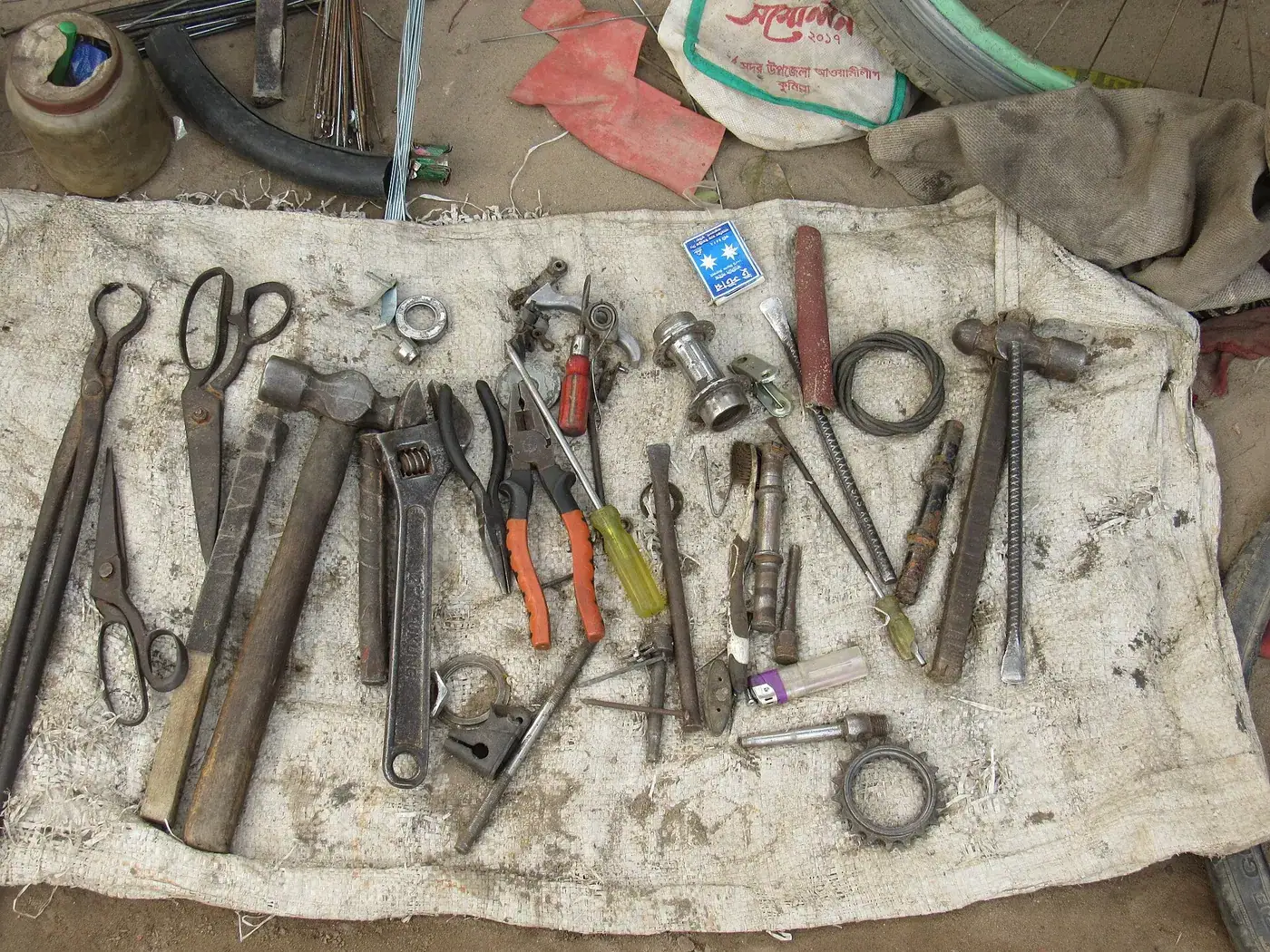
A bike's price tag is the part of the cost people argue about and the smaller part of what they pay. The larger part is the chain, the tyres, the brake pads, the lube and the service, and all of them are driven by miles rather than by years.
This guide does the division in front of you, at an example 40 miles a week, so you can swap in your own mileage and see which line moves. Every price is an example figure, said so in the same sentence, because this site carries no price feed and quotes no seller.
Divide the bike by miles, not by years
Riding 40 miles a week is 2,080 miles a year, which is the figure used everywhere in this guide. A $900 bike kept 5 years covers 10,400 miles, which is about 8.7 cents of machine per mile.
Keep the same bike 8 years and it covers 16,640 miles at about 5.4 cents a mile. Replace it after 3 years and the 6,240 miles it covered cost about 14.4 cents a mile, for exactly the same equipment. The bike did not change; the denominator did.
This is also why the price band matters less than people expect once mileage is high. The $1,875 bike at 8 years is about 11.3 cents a mile, which is less than the $900 bike at 3 years. A bike you keep is cheaper per mile than a bargain you replace.
| Bike price | Kept 3 years, 6,240 miles | Kept 5 years, 10,400 miles | Kept 8 years, 16,640 miles |
|---|---|---|---|
| $525 | $0.084 | $0.050 | $0.032 |
| $900 | $0.144 | $0.087 | $0.054 |
| $1,875 | $0.300 | $0.180 | $0.113 |
Each cell is the price divided by 2,080 miles multiplied by the years, with no resale subtracted. The cost-per-use calculator on this site takes a resale figure and your own mileage.
Consumables are the larger number, and they are predictable
Five lines account for nearly all the running cost. On example prices and intervals: a chain at $35 every 2,000 miles is $0.0175 a mile, a pair of tyres at $70 every 2,500 miles is $0.028 a mile, a set of brake pads at $25 every 1,500 miles is about $0.0167 a mile, lube and degreaser at $30 a year is about $0.0144 a mile, and an annual service at $90 is about $0.0433 a mile.
Added up, that is about $0.120 a mile, or about $249 a year at 2,080 miles. Put against the $900 bike kept 5 years at $0.087 a mile, the consumables are about 38% more than the machine. Anyone budgeting only for the bike has budgeted for well under half the cost.
The chain line is the one that controls the others. A chain replaced on time at $35 protects a cassette that costs an example $75 and a chainring set that costs more; a chain run to failure takes both with it. That is why a chain wear gauge at an example $15 is the highest-return tool in the whole list.
| Item | Example price | Interval | Cost per mile | Cost per year |
|---|---|---|---|---|
| Chain | $35 | 2,000 miles | $0.0175 | $36.40 |
| Tyres, pair | $70 | 2,500 miles | $0.0280 | $58.24 |
| Brake pads, set | $25 | 1,500 miles | $0.0167 | $34.67 |
| Lube and degreaser | $30 | per year | $0.0144 | $30.00 |
| Annual service | $90 | per year | $0.0433 | $90.00 |
| Total | $0.1199 | $249.31 |
Per-mile figures are price divided by interval; per-year figures are per-mile multiplied by 2,080 miles. Prices and intervals are examples chosen so the arithmetic is visible, not quotations from any seller.
Putting the two halves together
On the central example, a $900 bike kept 5 years ridden 2,080 miles a year, the all-in figure is about 8.7 cents of machine plus about 12.0 cents of consumables, which is about 20.7 cents a mile. Call it 21 cents.
Change one input at a time and the ranking is stable. Doubling the bike price to $1,875 adds about 9.3 cents a mile. Halving the mileage to 1,040 miles a year roughly doubles the machine share but barely moves the per-mile consumables, because those are driven by miles rather than by time, except for the lube and the annual service.
That last exception is the useful one. At low mileage the two time-based lines, lube at $30 and the service at $90, become a larger share: at 1,040 miles a year they alone are about 11.5 cents a mile instead of 5.8 cents. A bike ridden rarely costs more per mile in service than a bike ridden often.
| Miles a year | Machine per mile | Mileage-driven parts per mile | Time-driven lube and service per mile | All in |
|---|---|---|---|---|
| 1,040 miles | $0.173 | $0.062 | $0.115 | about $0.350 |
| 2,080 miles | $0.087 | $0.062 | $0.058 | about $0.207 |
| 4,160 miles | $0.043 | $0.062 | $0.029 | about $0.134 |
Mileage-driven parts are the chain, tyres and pads from the table above, which total $0.0622 a mile at any mileage. Time-driven lines are $120 a year of lube and service divided by the miles in the first column.
What the parts will cost next year
The Bureau of Labor Statistics reported that the all items consumer price index for all urban consumers rose 3.7 percent over the 12 months to September 2026 before seasonal adjustment, and reported recreation up 2.8 percent over the same 12 months.
Carrying the $249 annual consumable figure forward at 2.8 percent gives about $256 next year and about $271 in three years. That is not a forecast for bicycle parts specifically, which have their own supply story; it is the order of magnitude to budget rather than assuming the number holds.
If you buy parts abroad, U.S. Customs and Border Protection publishes an $800 duty-free personal exemption every 31 days for a returning resident who has remained no less than 48 hours outside the United States, with a flat duty rate above it and 3 percent given as the usual next tranche. A $1,000 wheelset bought abroad is $200 over the exemption, which is $6.00 of duty, and the landed-cost calculator on this site does that sum with your own figures.
The three changes that actually move the number
Ride more miles. It is the only lever that improves every line at once, and the arithmetic above shows it taking the all-in figure from about 35 cents a mile to about 13 cents between 1,040 and 4,160 miles a year.
Replace the chain on time. A $15 gauge and 2 minutes every month protects an example $75 cassette, and it is the single highest-return habit in the list. Chain wear gauges are made with a 0.75% elongation step for exactly this reason, and a chain that drops past that step is already costing you more than it saved.
Learn two jobs. Fitting pads and changing a tyre removes most of what a $90 annual service covers, and it is 3 steps each with a $25 multi-tool. Doing those two yourself takes the time-driven line from about 5.8 cents a mile to about 1.4 cents at 2,080 miles a year.
- Measure chain wear monthly with a gauge and replace at 0.75% elongation
- Run tyres at the pressure printed on the sidewall; under-inflation shortens tyre life and makes every mile feel worse
- Keep the drivetrain clean, because grit in the chain is what turns a 2,000-mile chain into a 1,200-mile one
- Learn to change a tyre and fit brake pads before paying for a third annual service
- Record your mileage, because every figure in this guide is useless without your own denominator
Before you buy
- Record your mileage for one month and multiply by 12 to get your own denominator
- Price the five consumable lines at your own shop and rebuild the per-mile table
- Buy a chain wear gauge and measure the chain every month
- Write the date and mileage on a note every time a chain, tyre or pad set goes on
- Separate the time-driven lines from the mileage-driven ones before comparing two bikes
- If you buy parts abroad, apply the $800 exemption before working out duty
Questions readers ask
- Is an expensive bike cheaper per mile?
- Only if you ride it more or keep it longer. The $1,875 example at 8 years is about 11.3 cents a mile and the $900 example at 3 years is about 14.4 cents, so the expensive bike wins there purely on years kept. At the same years and mileage the cheaper bike is always cheaper per mile.
- Why does riding less make each mile more expensive?
- Because two of the five consumable lines are driven by time rather than miles. At 1,040 miles a year, $30 of lube and a $90 service are about 11.5 cents a mile; at 4,160 miles the same $120 is about 2.9 cents. The chain, tyres and pads stay at $0.0622 a mile at any mileage.
- How often should a chain really be replaced?
- By measurement, not by calendar. Replace at 0.75% elongation on a wear gauge, which on the example figures used here falls around 2,000 miles for a chain kept clean and sooner for one run gritty. The reason is the cassette: a chain left past that point takes an example $75 cassette with it.
- Should I include clothing and shoes in the cost per mile?
- Treat them the way you treat the bike: price divided by years, then by miles. A $200 set of shorts, shoes and a jacket over 4 years at 2,080 miles a year is about 2.4 cents a mile, which is comparable to the brake pad line and worth having in the total.
- Does an electric bike change this arithmetic?
- The structure holds, with two lines added: electricity, which is small, and a battery, which is not. A battery is a wear item with a cycle count rather than a mileage, so it belongs in the machine column with its own years figure rather than in the consumables table above.
Sources
- U.S. Bureau of Labor Statistics — Consumer Price Index news release, 12-month changes to September 2026 including recreation — checked 2026-11-03
- U.S. Customs and Border Protection — customs duty information, $800 personal exemption and flat duty rate — checked 2026-11-03
- U.S. Consumer Product Safety Commission — bicycle requirements business guidance, brake performance under 16 CFR part 1512 — checked 2026-11-03
Some links on this site can earn us a commission. That does not change which product a guide recommends, and it adds nothing to your price. Advertising is not enabled on this site yet. When it is, ads will be labelled and kept visually separate from the guides.